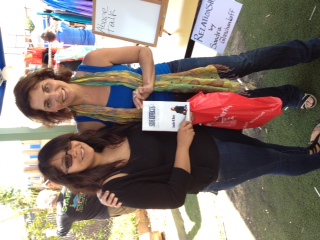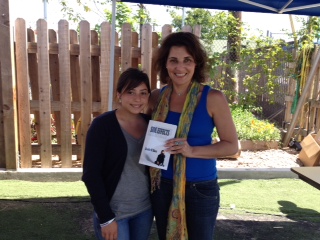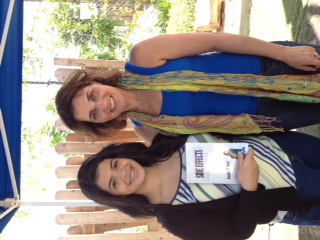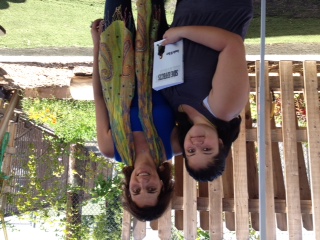
This past Saturday, forthcoming Martin Sisters author Sandra Gluschankoff presented Side Effects to four separate workshops at A Place Called Home in Los Angeles. The focus of the workshop was relationships, and Sandra asked me to prepare an introduction for the event. Because the relationships in Side Effects are extremely important, I thought I’d share that introduction here. I hope the words will help you take even more from the book.
Everyone says that your young adult years are supposed to be the best of your life, but any teen will tell you that notion is ridiculous. Kids are mean; there’s just no way to get around it. Unfortunately, adults can be mean, too. It’s important to note that the picture doesn’t always tell the whole story, no matter how many words it’s worth. We can’t know what’s going on in someone’s daily life just by looking at them.
If you take a look around you, you’ll probably come to some form of judgment about each person just by his or her appearance. Don’t actually take a look around, unless you want to see the eyes of everyone else staring at you. Think for a moment about what they would see if your insides were painted on your outside. How would the person next to you perceive you if he or she knew the troubles you have at home? What would your teacher say if he or she knew you have a learning disability that prevents you from keeping up with the rest of the class? What would that guy on the bus think if he knew the dark circles under your eyes and your dirty clothes aren’t because you’re a drug addict, but because you work two jobs in addition to school to help your mom?
As you can see, it’s easy to overlook the internal struggles and come to our own conclusions. This is what Isaac Matthews deals with in Side Effects.
Isaac suffers from Anxiety Disorder, which leaves him exhausted during the day and unable to interact with other kids his age. He forces himself to stay awake at night to avoid the night terrors, but that just means he falls asleep over his desk at school where all the other kids can witness him screaming when he’s jolted awake by dreams. He’s laughed at, mocked, bullied, and all because he’s severely misunderstood. It’s easy for the other students to ignore his pain, because then they don’t have to feel it, either.
Things change when the biggest bully in school stops to wonder just what causes Isaac’s withdrawal from society. It’s a beautiful thing when one person asks, with wholehearted sincerity, “What’s going on?” Whether you want to answer the question or not, the important thing is that someone cares. When David Brooks takes an interest in Isaac, it’s easy to gloss over his concern. After all, this boy has everything–at least according to popular belief. Of course there’s room in David’s heart for his new friend. He can’t possibly hurt when he’s the star quarterback, chick magnet, and overall king of the school.
There is no way to know. Maybe David is the luckiest guy to ever live, and maybe he isn’t. When you see the most popular guy or girl in school, do you ever stop to wonder if life might be rough for them, too? Maybe they cover their pain with bravado, and that’s why they’re so terrible to those around them. Maybe they really do have it all together, but that doesn’t mean they can’t learn from someone who’s hurting.
David Brooks learns from Isaac that he can’t be quick to judge, while Isaac learns that stereotypes aren’t fair. It’s through David’s concern that Isaac gains the confidence needed to handle Grace, the beautiful new girl.
She’s gorgeous, bubbly, funny, and…a cheerleader. She can’t possibly see Isaac for who he is, can she? What Isaac doesn’t know is that Grace’s brother also has anxiety disorder, so she knows exactly what Isaac deals with on a daily basis. She also looks right past the dark circles under his eyes, wrinkled clothes, and awkward conversations to see the real Isaac inside–the Isaac who is easy to love.
Side Effects isn’t just a story about dealing with anxiety disorder, even if the main focus is to remind sufferers they’re not alone. What we can also take from the book is that everyone is crying out for understanding and love. If we take the time to see who they really are, underneath the rough exterior or the shining armor, we may find someone who knows exactly why we hurt and how to make it better.
Sandra also gave away four books—one to each workshop. She was kind enough to send photos of the winners. I hope you’ll keep an eye out for her book through Martin Sisters Publishing. I’ll be sure to let you know when it arrives.
The Winners